
Lynx vs Bobcat
This is How to Tell the Difference Between a Bobcat and a Lynx. The following story happened during one of our road trips across the US and Canada.
There it was, a large cat sitting calmly in the middle of the road and staring right at us. It was my first wild cat sighting in North America, and it was a lynx! A Canada Lynx! We couldn’t believe our luck. Visitors had reported seeing lynx in the guest book here at Riding Mountain National Park in Manitoba, Canada, but I never believed we would actually see one.
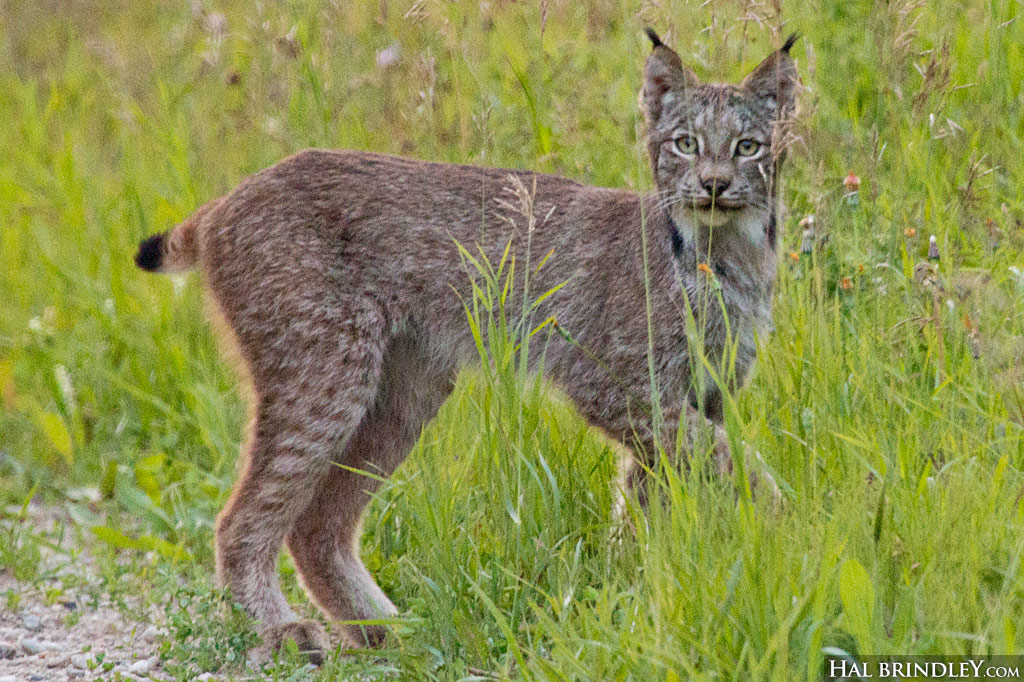
We watched the cat for nearly an hour in the setting sun, hunting along the side of the road. I managed to get a few decent photos and video clips and was very proud to report on our American Safari page that we had seen a lynx.
But then I began to wonder. Had I actually seen a lynx? I looked at a range map and realized that the Canadian Lynx (Lynx canadensis) and the Bobcat (Lynx rufus) overlapped in this narrow band near the US/Canada border.
[Update 2020: Since originally making this map below I’ve noticed the estimated range of lynx has contracted in the U.S. I consider the IUCN Redlist range map to be pretty authoritative and you can always check it against a list of lynx sightings on iNaturalist, but evaluate questionable observations for authenticity.]
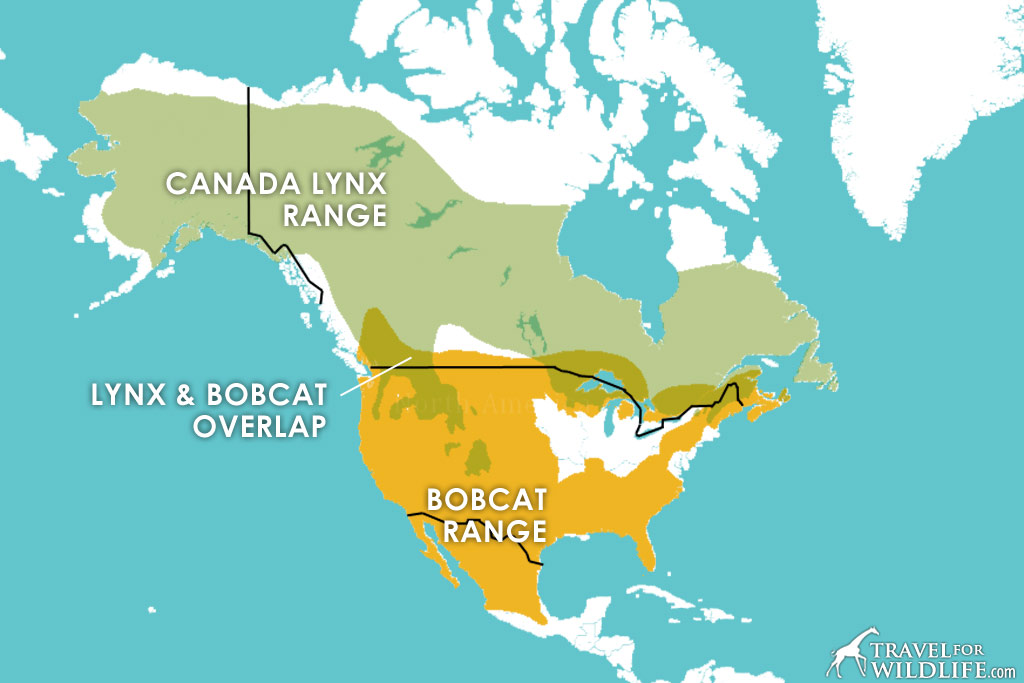
The two cats are pretty similar in size and appearance. It could easily have been either. That’s when I decided it was time for me to learn…
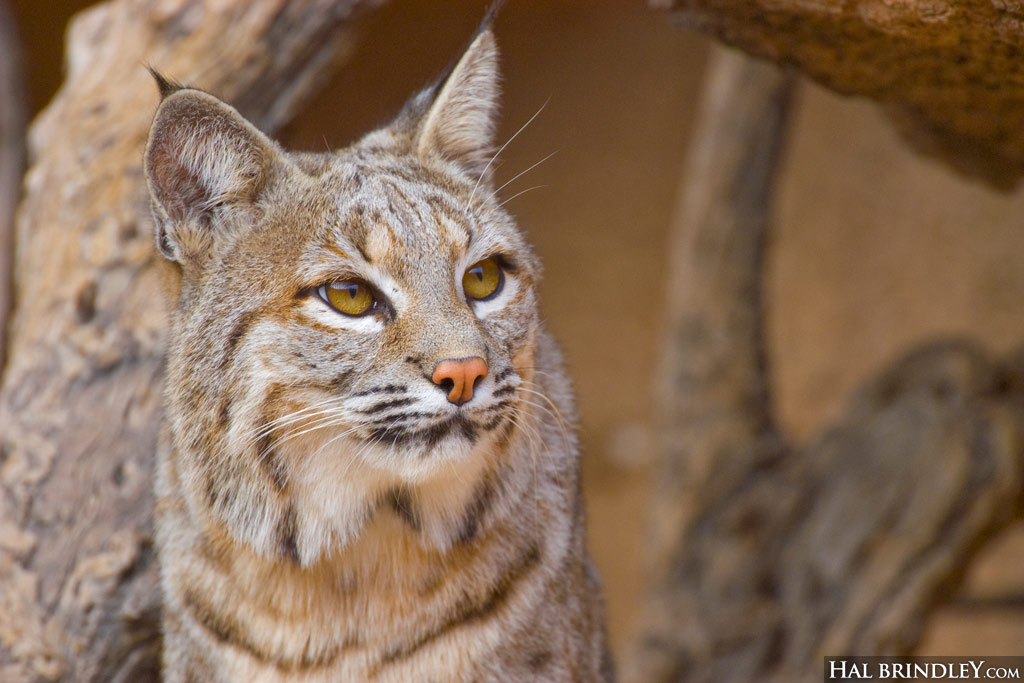
Is it a Bobcat or a Lynx?
I started to get a little nervous when I read that Lynx subsist almost entirely on snowshoe hare. Even though we did spot snowshoe hares in the area, the cat we observed was hunting birds! Watch our video to see birds barely escaping from the cat’s first two pounces.
But then I discovered that Canadian Lynx at the southern end of their range tend to have a more varied diet than their farther-north counterparts, which includes birds. Then I noticed how short the cat’s hair was. Most lynx photos show cats with luxuriously long winter coats and huge fluffy cheek tufts. But this was mid summer. So I convinced myself that it was simply wearing its summer coat.
Finally I found the definitive proof: tail color. Lynx have an entirely black tail tip, while the tip of a bobcat’s tail is black on top, and white on the bottom. Whew. So it was official. I had seen a lynx!
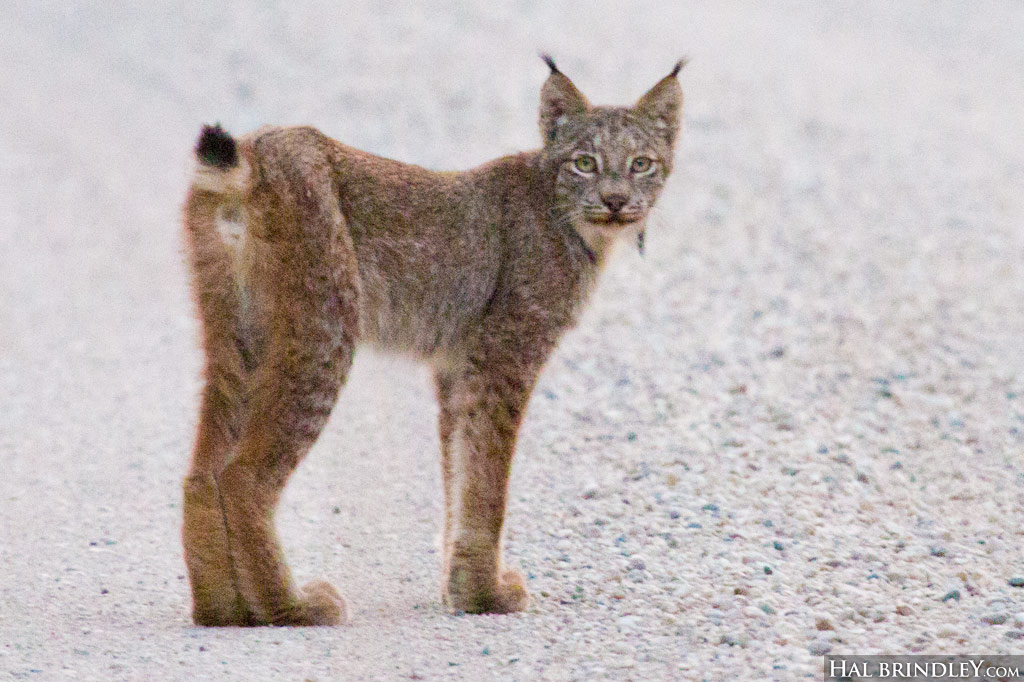
But wait. What about hybrids. After a little research I soon learned that there have been several documented cases of naturally occurring bobcat/lynx hybrids, showing intermittent features of both species. (source: Natural Resources Research Institute).
So in conclusion: who knows? Based on all the traits I’ve researched I feel pretty certain it’s a lynx. Check out the photos and decide for yourself. What do you think?
To help others in their quest to figure out whether they have seen a bobcat or a lynx, I’ve developed this guide:
How to Tell the Difference Between a Bobcat and a Canadian Lynx
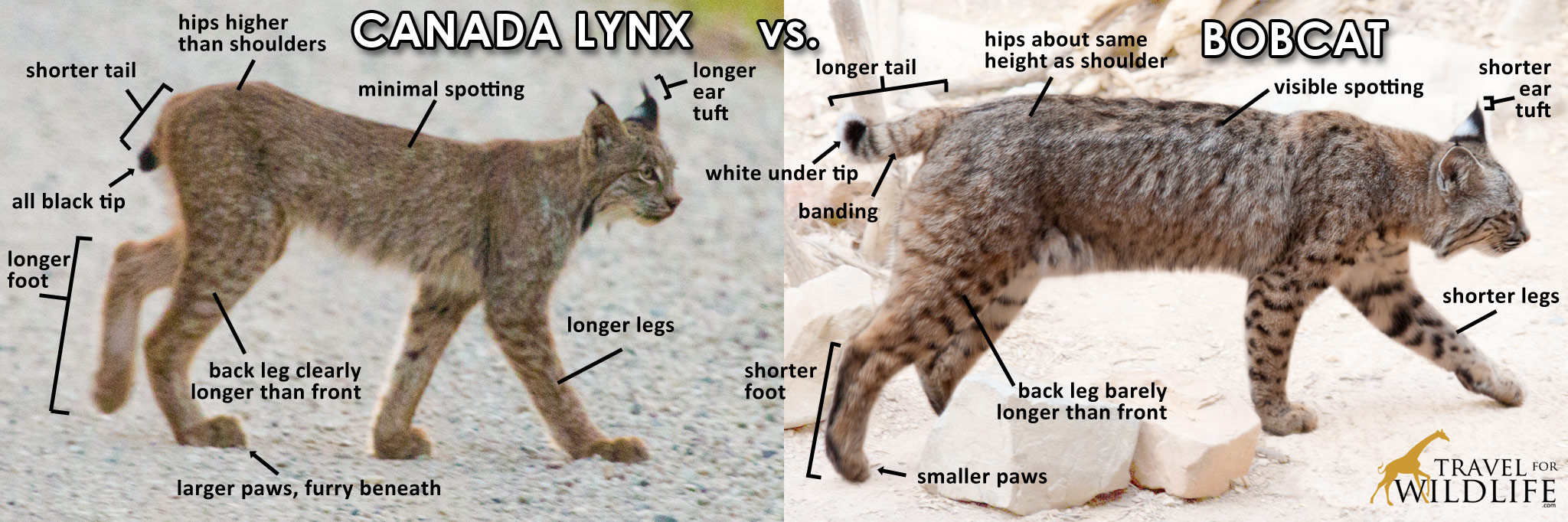
(click on the photo for a larger view)
The above photo compares the lynx vs bobcat. I photographed this wild Canada Lynx in Riding Mountain National Park, Manitoba, and this captive Bobcat in the Arizona-Sonora Desert Museum in Tucson, Arizona.
The table below is a list of the differences between a Canada Lynx and a Bobcat based on various physical traits and behaviors. You may be surprised to note that Bobcats can actually get much larger than Canada Lynx. On our list of the biggest cats in the world, you’ll see that Canada Lynx may reach up to about 26 pounds (12 kg) while the biggest bobcats may weigh up to 44 pounds! (20 kg).
Traits of Bobcat and Lynx
(You can scroll table sideways to see all columns.)
| Trait | Canada Lynx | Bobcat |
|---|---|---|
| Ears | longer ear tuft | shorter ear tuft |
| Tail | shorter | longer |
| entirely black tip | black tip, white underneath | |
| no banding | banding | |
| Color | indistinct spotting, primarily gray | distinct spotting, primarily reddish brown |
| Legs | longer legs | shorter legs |
| back legs visibly longer than front | back legs only slightly longer than front | |
| Feet | bigger paws, padded with fur beneath | smaller paws |
| longer back foot | shorter back foot | |
| Size | overall smaller | overall larger |
| Disposition | generally gentler | generally more aggressive |
| Diet | primarily snowshoe hares | wider variety of prey items |
Whether you’ve seen a lynx or a bobcat, consider yourself a very lucky person. North America’s wild cats are not easy to see!
We’ve received many messages from people telling us they’ve seen a big cat in their yards but didn’t have time to take a photo to identify it. Lynx or bobcat? Why not try putting a trail camera in your yard? We have two trail cameras in ours that we leave on day and night. We’ve had plenty of photos of our regular day visitors but also the nocturnal ones, like foxes, coyotes and opossums. We use [easyazon_link identifier=”B00W3JNMEM” locale=”US” tag=”traforwil-20″ cart=”n”]Bushnell Natureview HD[/easyazon_link] and we even take it on our camping trips. Maybe you’ll get lucky and catch a bobcat or a lynx!
Read this next:
How to tell the Difference Between Black and White Rhino
Possum vs Opossum: What’s the Difference?
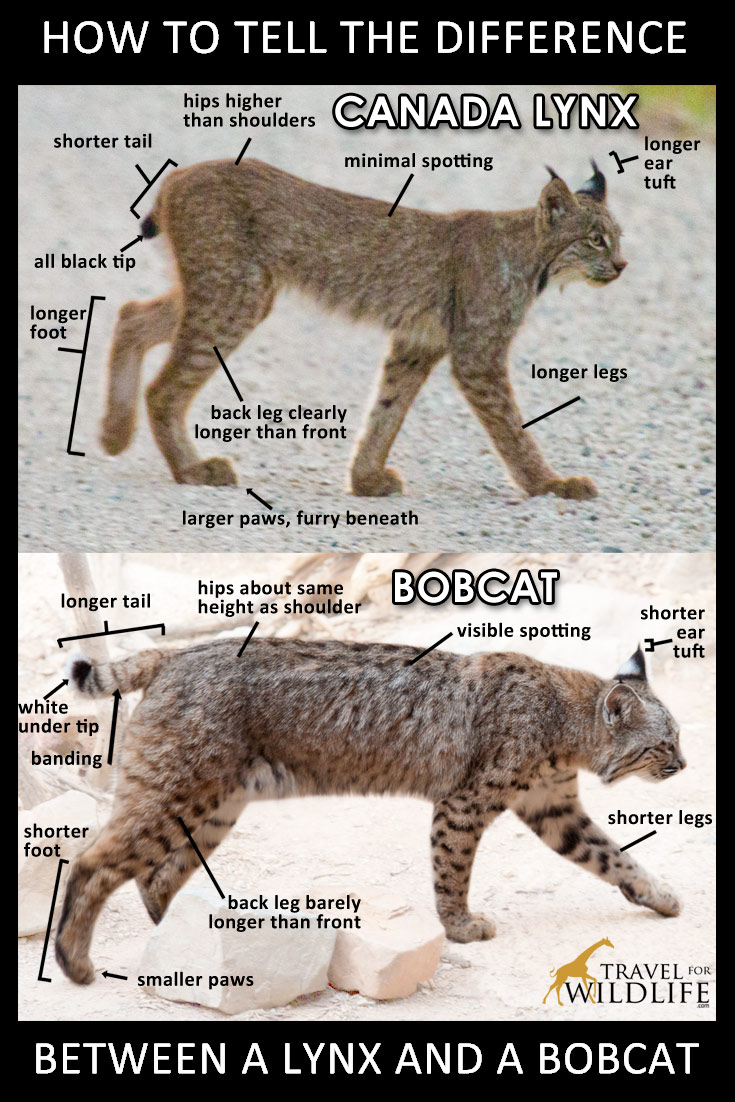
Did you find this article helpful? Pin this image!
Have you ever seen a lynx or a bobcat? Let us know where in the comments below!

Hal Brindley
Brindley is an American conservation biologist, wildlife photographer, filmmaker, writer, and illustrator living in Asheville, NC. He studied black-footed cats in Namibia for his master’s research, has traveled to all seven continents, and loves native plant gardening. See more of his work at Travel for Wildlife, Truly Wild, Our Wild Yard, & Naturalist Studio.
P. Sprague
Friday 20th of February 2026
Hey all Have had a cat showing up on game cam last two nights, just checking to see which one is. Have had to the good luck to have had 2 encounters with these cat, both times in Yukon near Dawson City and on Dempster. The first time was a mother and 2 kittens on a trail ( lasted about 15 sec.) Second time was on a bailley bridge. This time Feb. 2026 i have pics at my cabin in southern ont. near Kingston. Found a Barred Owl that something killed just beside my deer feeder.( probably a great horned owl, however there was a murder of crows in the jack pine the the owl was under). The deer havent been feeding so I think the Lynx has spooked them. To early for the black bear to spook them, still over a foot of snow on ground. Am very greatful to see these beauitful animals considering im about 20 minutes north of 401. Sending out warmest wishes to all. Paul
Mathew
Friday 8th of July 2022
I don't know if I'm too late for posting a comment here because your last comments were in November of 2021, and it is now July of 2022. I'm going to do it anyways, because I am extremely shocked and I feel extremely lucky for my encounter. My encounter was earlier today. Today's date is Thursday July 7. I live in a relatively small town called Apple Vally. It is located in the high desert of SouthernCa.. Right in the middle of town on highway 18 is a very small park. Just a couple of trees and some grass. Behind this park is a small hill of mostly rocks. I had climbed up to the very too because I like to watch the birds enjoy flying in the wind. Next thing I know there it was about 10 to 20 feet away from 8t. I just happened to see it pop its head out from behind a rock to check me out since I already had my phone out because of the birds, I got a great short video of it as we checked each other out for a few moments and then it walked away and disappeared on the other side of the hill. So awesome. .
Hal Brindley
Friday 2nd of September 2022
Thanks Matthew! How cool! Please keep the great sightings coming!
cristina garcia
Tuesday 12th of July 2022
How lucky! Awesome
marcel beaudet
Monday 1st of November 2021
north berwick maine today 11/1/21 , that is how i ended up reading this article. i was curious because the tail was 10"s, it had a very long tail, the spots were not as pronounced as in some images i saw. it crossed through my yard at noontime, i did get photos which are not the best. i think it was a male it was big at least 30lbs.
JANET MCKEEN
Sunday 10th of October 2021
I live in Estes Park, Colorado, in a condo on the east side of town. I happened to look out of my window about 3 pm on October 9th 2021, & saw what I thought was a Bobcat. I had my binoculars & could see it very clearly. I realized it was a Lynx, it was bigger, with longer legs, tufted ears, black tail, a thinner body. I was lucky to be able to observe it for several minutes. I compared the Bobcat & the Lynx on my computer, & it was definitely a Lynx.
cristina garcia
Tuesday 9th of November 2021
What a great sighting!
Cheryl
Thursday 5th of August 2021
I lived in Oroville Washington and walked into my garage one day and disturbed what I believe to be a lynx. We had an old mattress in the rafters and it was on that. My son left the garage side door open so when I came into the main door it zipped out the side door so fast I didn't realize what I saw before it was already gone. It was on the smaller side. Sort of a golden brown. It had ear tufts and black tail at the end of its tail, and not much spotting except mostly on the legs. I wondered if it wasn't a lynx/bobcat hybrid. It was FAST. Oroville is in North Central Washington State. I've seen many cougar in the area too. One night on the way home from work I came around and curve and standing on the side of the road was a huge cougar and it was a dark chocolate color. I didn't know they could be that dark until I saw this one. It was a beautiful animal. Several other times I saw cougars when they would streak across the road heading towards the river at dusk.